
Introduction
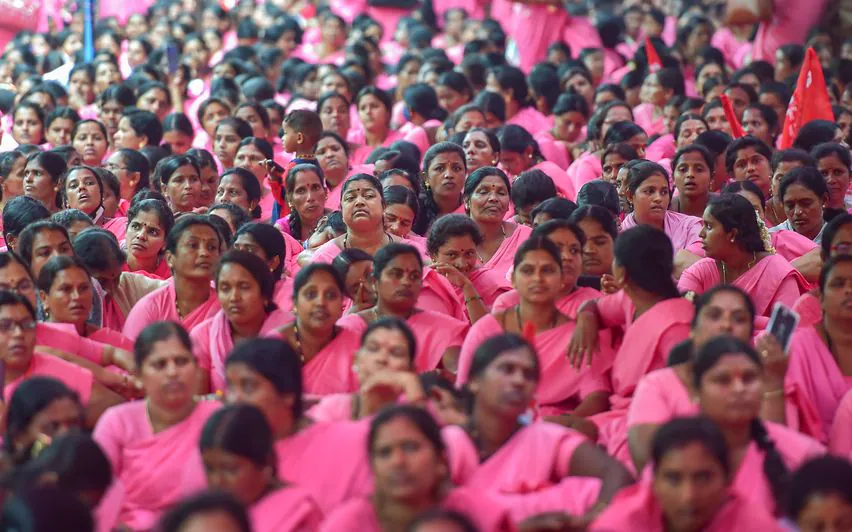
Accredited Social Health Activists (“ASHAs”), primarily women, are recruited under the National Health Mission (“NHM”) directly by the government. They are clothed as ‘honorary volunteers’, and thus conveniently excluded from the definition of ‘workman’ of the Industrial Relations Code, 2020 (“IRC”). They are paid a meagre honorarium despite shouldering the frontline community healthcare responsibilities. ASHAs raise community awareness, provide counselling on maternal and child care, mobilise access to health services, work with local health committees, and report health issues, all while receiving ongoing training for skill enhancement. The informalisation of their employment status, and evasion from standardisation, deprives them of regularised wages, security coverage, pension, and other benefits. Although some States, including Kerala, Maharashtra, Karnataka, and Rajasthan, have introduced honoraria, incentives, insurance, and other welfare measures. These protections remain fragmented, vary significantly across jurisdictions, and fall short of the benefits associated with a statutory status.
Another exacerbating factor is the gendered nature of the work. The perception of ‘ethic of care’ intrinsically stemming from empathy clouds the need for proper monetisation and safeguards under legislation as disparaging and stripping the sanctity of their services.
The article is divided into two parts. Part-I seeks to establish that ASHA workers fulfil conditions to be recognised as workman under the IRC. Part-II aims to show how the feminisation aspect, drawing roots from grounded jurisprudential beliefs, adds another layer to the glaring need for proper legitimisation of their status.
ASHAs as ‘workers’ under the IRC
The analysis in this Part proceeds under the IRC, which consolidates and replaces, among others, the Industrial Disputes Act, 1947 (IDA). Case laws, including the leading Supreme Court decisions cited below, continue to guide the interpretation of analogous provisions under both the statutes. Where a provision of the IDA is referenced in a case, the corresponding IRC provision is noted for contemporary relevance.
Having recognised the benefits of officiating the status of ASHAs as workers under the IRC, we try to establish the same by proving, firstly, the ASHA system as a whole falls under the definition of industry as under Section 2(p) of the IRC (corresponding to Section 2(j) of the IDA). Secondly, the relationship between the ASHAs and the state is akin to an employer-employee relationship. Thirdly, ASHAs classify as ‘workers’ under Section 2(zr) of the IRC (corresponding to Section 2(s) of the IDA).
The ASHA System as an ‘Industry’ under Section 2(p) IRC
Bangalore Water Supply sought to settle all concerns regarding what is an industry, by laying a triple test. At the base, industry is to be a systematic and purposeful pursuit, and the term ‘undertaking’ is to be shaped and understood in accordance to the words preceding it. In alignment with the preamble of the ID Act, where it seeks to resolve disputes between the employer and employee, a cooperative endeavour between them is imperative and lastly, services produced should be such that the community has a material concern in it.
The NRHM guidelines for the ASHA system provide a comprehensive framework for the selection criterion, process, institutional and working arrangements, and fund flow mechanism to pan out the scheme. This definitely is not a “transcendental flight” but an organised and systematic activity. In order to fructify the scheme, states have been given flexibility to design the incentive patterns.
This can be paralleled with the Anganwadi system, under the ICSD, where the SC found that they are merely ‘community volunteers’ (similar terminology is used for ASHAs, ‘honorary volunteers’) implementing welfare schemes and do not carry a state function. Extending this to our case, we disagree with the stance of the court, as simply couching essential services as ‘volunteerism’ and ‘welfare schemes’ does not exclude them from the ambit of industry. The compassionate scheme is not with respect to workers but with reference to the recipients of services, in this case, the indigent consumers. The organisation and not the purpose should be looked into. The characterisation of an activity as charitable or in the public interest is not determinative of its status under labour law. As recognised in Bangalore Water Supply, the key inquiry is whether there is a functional and organised activity involving cooperation between labour and management for the provision of services. If the nature of the service alone were decisive, governments could avoid labour obligations by simply labelling essential public services as welfare schemes while relying on a structured workforce.
The diversion of budget for welfare purposes does not alter the fact that the economic activity, involving employer-employee cooperation and the production of goods or services, qualifies as an industry. The sovereign function immunity does not stand, as the mere extension of material community healthcare duties under government schemes, is to eliminate the pocket-filling private coffers and lucre-loving motive. The term industry should not be clouded in terms of profit motive, commercialisation or degradation of the stature of service, but rather embrace the most sublime activities. Hence, the ASHA system is an organised activity catering services of value to community.
Employer-Employee Relationship between the State and ASHAs
At the offset, it is essential to understand how the dynamics between the government and ASHAs work. The former realises the bridging role played by the latter in the community health system and ‘regularly’ reviews and finalises its incentives. The selection is done ‘carefully’ by the District Health Society or the Gram Panchayat and the process is overseen by the NRHM, showing the power of selection.
They are continuously trained to equip them with necessary skills, demonstrating that the ASHAs are integral to the fulfilment of the objective of NRHM at the very roots. This is coordinated by the NIHFW and the SIHFW, at the national and state levels respectively, showing the right the governments have to control the functioning of these workers. This is further averred by the various ‘monitoring and evaluation’ indicators set up along with bi-monthly meetings to trace the progress and maintain a report. Moreover, the payment funds flow to states via SCOVA from the centre, asserting the economic involvement. Courts have adopted a pattern of evaluative tests rather than a straightjacketed formula. The situational contours of control and supervision, organisation, economic reality, and mutuality of obligation tests have paved the way for a liberal and more accommodating approach.
The structure of NRHM delegates authority at various levels while regulating the ASHA system. However, it is the ‘right’ to exercise control which is to be with the employer, rather than its absolute application itself, which in this case lies with the government. Extent of supervision also varies given the context and nature of work. The ASHAs are provided training according to standards determined by the government, and they are required to give progress reports. Moreover, the state governments, panchayats and other officials are authorised to undertake those tasks, so that necessary changes can be made. The delegation of operational responsibilities across different levels of administration therefore demonstrates an organised and systematic activity rather than the absence of structure or control. Consequently, while the government retains significant control over the design, implementation, and supervision of the programme, the welfare character of the functions performed by ASHA workers strengthens, rather than weakens, the case for examining their status under ordinary labour law principles.
Additionally, the fact that ASHAs do not receive salary but performance-based incentives, and are part-time workers, does not justify their non-recognition. Neither regular wages nor multiplicity of employers is an issue until the right to control by the employer, in this case the government, while working under them is shown. The application of the economic reality and dependency tests give a similar conclusion. The ASHAs are majorly from the lower economic strata, and the feminised nature of work exacerbates challenges. They are economically dependent on the ‘honorarium’ they get, which although does not determine control but is crucial to answer whether an employer-employee relation exists. The ASHA system is the backbone of NRHM, hence integrally connected and pertinent to its success rather than being supplementary to it.
Inclusion as ‘Worker’ under Section 2(zr) IRC
In order to be covered by the IRC the employee should fall under the definition of ‘worker’ under Section 2(zr). To begin with, the nature of work, not the title or designation, determines legal protection. Labelling ASHA workers as ‘honorary volunteers’ or ‘scheme workers’ reflects the government’s clear reluctance to extend protective legislation to them. If the ground reality is looked at, the ‘free will’ without any expectation of returns, stemming from women of lower strata of the society, would be unrealistic. Though said to be ‘part-time,’ newspaper clippings show ASHAs, one available in 1000 persons in villages (in reality they cater to a lot more), spending more than 7-8 hours a day in hospitals. Hence, the idea of rendering ASHA workers to be engaged in ‘part-time’ and ‘voluntary’ activity is a farce.
The Guidelines in ASHA lays down the criteria for its members. It should preferably be a woman (married/divorced/widow) within the age group of 25 to 45 years, have communication and leadership qualities, resident of that village, with a formal education till tenth grade. It is clear from the roles and responsibilities of ASHA workers that they do not engage in operational, clerical, supervisory or technical work. Moreover, since it does not entail ‘extensive training’ or ‘specialised knowledge’, it is not a profession but occupation, as it in most cases a principal activity earning wages for them. We rather argue, considering the criterion, that they fall under the skilled category of workers, (also taking colour from the ‘manual’ factor, by applying ejusdem generis to the definition), as although they have a rudimentary educational qualification requirement, they are also trained by ANMs and AWWs, to equip them with the necessities of the role.
The ban on ASHAs and AWWs contesting elections contradicts their designation as “volunteers”. Moreover, courts treat them as “workers” only in employment disputes, recognizing the ICDS as an “industry”. This creates a conflict, since if elected roles hinder their duties, they cannot be considered part-time workers. This contradicts a union government clarification to the ILO, highlighting inconsistencies in their classification and treatment.
In C.H. Sharma, the court acknowledged ASHAs’ under-rewarded status, ordering pay increases and access to facilities, but stressed the need for legislative welfare reforms like the Social Security Code. Despite attempts like the ASHA Workers (Regularisation of Service and Other Benefits) Bill, 2020, and the 45th Indian Labour Conference’s recommendations, these proposals remain largely tokenistic. Comparatively, Pakistan’s community health workers, through the All-Pakistan Lady Health Workers Association, have successfully formalised their work, of showcasing a possible pathway for ASHAs.
Conclusion
This Part establishes that the ASHA system satisfies all requirements for recognition under the IRC, as the programme constitutes an ‘industry’, the State-ASHA relationship indicate employment, and ASHA workers fall within the definition of ‘worker’ despite their classification as ‘honorary volunteers’ or ‘scheme workers’.
The need for legislative reform remains pressing. Despite consolidating India’s labour law regime, the IRC continues to exclude ASHA workers in practice through deliberate classificatory devices. Part II of this paper examines the structural foundations of this exclusion, demonstrating how the feminisation of care work deepens the precarity of ASHA workers. It argues that the demand for recognition must be understood not only as a question of labour rights, but also as one of gender justice.
Author Bio: Palak and Bratati are 4th-year students at the The West Bengal National University of Juridical Sciences (NUJS).
[Editorial note: This piece was edited by Aditi Bhojnagarwala and published by Vedang Chouhan from the Student Editorial Board]