

Understanding Rajeev Dhavan is a challenging exercise – whether in the courtroom or in print. Here, (pp.5-6)I have done my best, of course as a critique.



This article examines India's Digital Personal Data Protection Act 2023, focusing on the adequacy of its consent-based framework as the primary mechanism for privacy protection. It discusses...

This article examines the Supreme Court’s 2025 judgment on the Aravalli Hills and Ranges, focusing on the Court’s effort to resolve the long-standing definitional ambiguity surrounding the ecosystem...
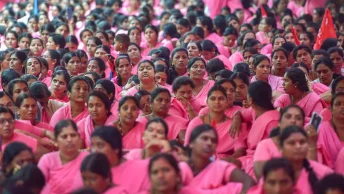
The article is divided into two parts. Part-I seeks to establish that ASHA workers fulfil conditions to be recognised as workman under the IRC. Part-II aims to show how the feminisation aspect...
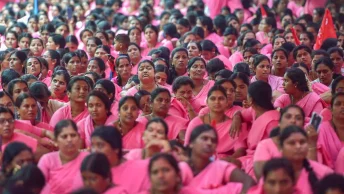
The article is divided into two parts. Part-I seeks to establish that ASHA workers fulfil conditions to be recognised as workman under the IRC. Part-II aims to show how the feminisation aspect...

Summary: The article analyses the case of Hari Devageeth v Union of India. It highlights the conflict faced by the court between two constitutional rights: a transgender man’s right to bodily...
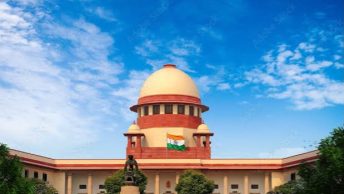
Introduction The fifth panel highlighted the multi-faceted dimensions of behavioural accountability within the Indian Judicial system. Moving beyond the constitutional frameworks, the panelists...
this is not a comment on the substance of the argument. only, your piece made me wonder if there is a distinction between dhavan the lawyer and dhavan the public intellectual? we see no problem for criminal lawyers defending ppl they might find distasteful personally and politically. do/should we have different standards for constitutional lawyers? indeed, dhavan himself may claim that he only argues for a position he feels comfortable with and that there was a real change in his beliefs between 1991 and 2008. but at a general level, i wonder what makes an ethical public lawyer – one who makes the best legal case for the client before him, or one who only chooses briefs whose politics he agrees with? can we criticise lawyers for positions they take in the courtroom? of course, the counter-argument is perhaps that senior advocates do in fact have a choice (do they?) and given the stakes involved in public law cases, criticising them for their legal arguments is fair game.
My understanding is that the judgment in Nagaraj case did
not address the issues adequately.
It gave some general principles and
left it for the courts to decide on the individual cases.It did not strike down the amendments made in the constitution to protect reservations for SCs/STs
in promotions. The reservation in
promotions is not a simple issue
and the rules in Centre and states may not be uniform.
Till 1997 OBCs also enjoyed reservation in promotions.Now there is a demand to restore this.
Arun Shourie addresses this issue
in his book and provides a critique
of the judgments, particularly the
judgment in Thomas case.Given the
number of cases and the complex
nature of rules and their interpretation this question
of reservation in promotions
deserves a indepth study.