Introduction
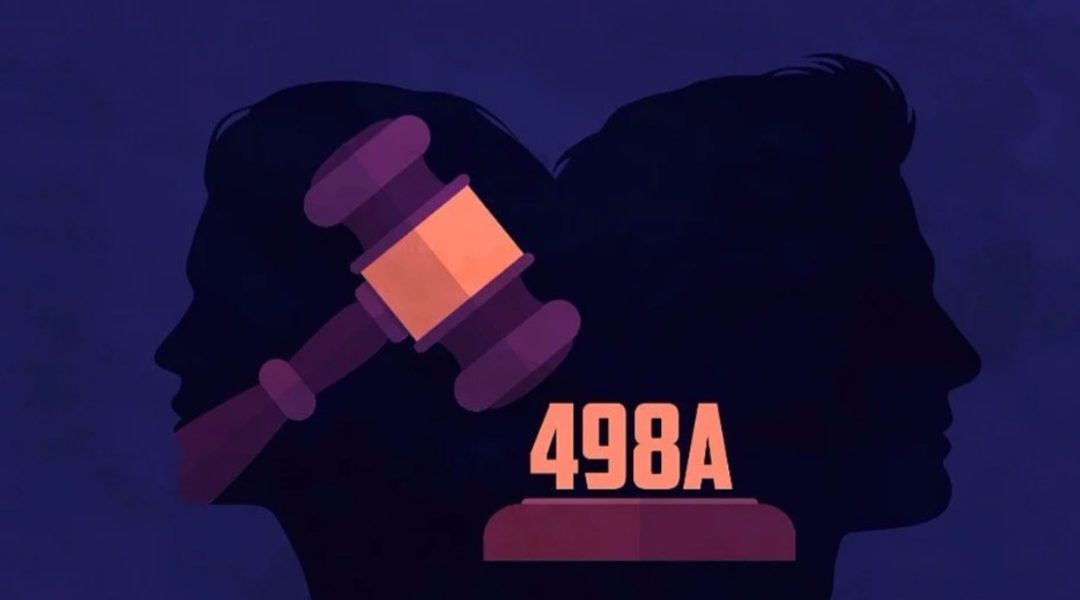
In seeking to prevent misuse of the law, the judiciary may have unwittingly diluted the very intention the Parliament sought to preserve. Recently, the Supreme Court (“SC”) in Shivangi Bansal v. Sahib Bansal endorsed the guidelines laid down by the Allahabad High Court (“HC”) in Mukesh Bansal v State of U.P, which directed that all cases under Section 498A must undergo a two-month mandatory cooling-off period commencing from the registration of the First Information Report (“FIR”) or complaint, and then be referred to Family Welfare Committee (“FWC”). The Court with this judgment has revived an institutional mechanism as laid down in the case of Rajesh Sharma v. State of Uttar Pradesh.
However, this decision appeared to conflict with the Court’s own precedent in the Social Action Forum for Manav Adhikar v. Union of India, where the establishment of such committees was struck down on the ground that it was outside the scope of judicial function. The Court had held that assigning extra-judicial duties to a committee lies beyond the scope of the Code of Criminal Procedure (“CrPC”) or any other statute and, thereby, falls outside judicial competence. This apparent inconsistency raises an important constitutional question about the limits of judicial power.
Thus, in this blog, we firstly examine the legislative intent underlying the penalisation of cruelty; secondly, we analyse this intent considering the constitutional misstep committed in Mukesh Bansal; and lastly, we assess the societal impact of the constitution of FWCs as a consequence of the endorsement of the Mukesh Bansal in Shivangi Bansal judgment of SC.
Legislative Intent Behind Punishment Against Cruelty
Before turning to the ramifications of the SC’s decision, it is apposite to first interrogate the legislative intent behind this provision to critically analyse how the endorsement of FWCs and a cooling off period in Shivangi Bansal has undermined the same. Section 498A, presently Section 85 and 86 of Bharatiya Nyaya Sanhita, is a non-bailable, non-compoundable and cognizable offence. Since the provision retains its severity, and its nature remains unaltered, it indicates that the legislature has no intent to introduce changes which may undermine the applicability or interpretation of this Section. It therefore becomes necessary to scrutinise whether the establishment of FWCs and a two-month cooling-off period deviates from the original protective legislative intent behind these provisions.
While various reports have acknowledged the instances of misuse under the cruelty provisions and have contributed to developing safeguards through CrPC provisions, the 243rd Report of the Law Commission of India provided the most comprehensive analysis of Section 498A. It denied any dilution to the Section and stated that “misuse (the extent of which is not established by any empirical study) by itself is not a ground to abolish S,498-A or to denude the Section of its teeth. The social objective behind the Section and the need for deterrence should be kept in view while at the same time ensuring that the complaints filed with false or exaggerated allegations out of ulterior motives or in a fit of emotion should be curbed.” It also explicitly elucidates that there are different percentages of misuse given by the judiciary based on their experiences or ipse dixit, rather than ground level study.
Against the background of this report, while there is no doubt that 498A has structural issues that need to be addressed, low conviction rates, a matrix used by the court in various cases of Section 498A, alone do not substantiate claims of widespread misuse. Legal practitioners widely agree that a low conviction rate can result from several factors, such as the high burden of proof in criminal cases, procedural delays, or difficulties faced by complainants in presenting evidence, rather than deliberate abuse of the law.
NCRB statistics from 2018 show that the conviction rate under Section 498A was approximately 13%, with over 90% of cases remaining pending, indicating that most cases do not culminate in a final adjudication on merits. Further, a Delhi District Court study covering the period 2021–2025 revealed that out of 9,950 trials under Section 498A, only about 0.2% resulted in convictions, while nearly half the cases were quashed even before the commencement of trial. These figures highlight systemic and procedural delays, rather than any evidence of false implication or misuse.
It has been noted that the rate of conviction under Section 498A when a woman is alive is less than 1% as cases languish in the magistrate for years without reaching any finality, wherein it becomes natural for the parties to compromise and compound an offence with the consent of the court. Therefore, conflating low conviction rates with systemic misuse is not an empirically supported reality.
Despite this, the SC, in various cases such as Rajesh Sharma and Shivangi Bansal, continues to link low conviction rates to rising misuse, thereby pushing an empirically faulty narrative in its judgments and introducing judicial procedural safeguards on that basis. This raises serious constitutional concerns which warrant attention.
The Constitutional Misstep in Mukesh Bansal
The SC’s decision in Shivangi Bansal raises serious concerns under the doctrine of separation of powers, which forms part of the basic structure of the Indian Constitution. In State Of Jharkhand and Anr. v. Govind Singh, the SC, citing several precedents, reiterated that when a clear statute exists and the legislative intent is explicitly conveyed, the court has no power to innovate or usurp legislative function under the guise of interpretation. Even through extraordinary powers granted to the Supreme Court under Article 142, the judiciary cannot supplant, but only supplement the law.
However, in this case, the judiciary adds to an already complete law, adversely impacting the severity of the provision in two ways. Firstly, its blanket application may cause unnecessary delay in genuine cases and risk the destruction of evidence and secondly, given the patriarchal nature of our society, the women seeking protection under these provisions may be burdened with societal pressure to settle the matter via mediation to preserve family reputation. Taken together, these concerns point toward a judicial overreach into the legislative domain.
Such judicial overreach is starkly evident when contrasted with the SC’s earlier, constitutionally sound decision in Arnesh Kumar v. State of Bihar. There, the Supreme Court scrupulously operated within the existing CrPC framework, mandating strict adherence to procedural safeguards under Section 41 and 41A, CrPC to curb arbitrary arrests. It neither altered the substantive law under Section 498A nor cast aspersions on the complainant’s credibility. This distinction is fundamental. Arnesh Kumar was a procedurally correct judgment falling within the boundaries of judicial activeness, whereas the line of cases beginning with Rajesh Sharma v. State of U.P and Mukesh Bansal, establishing and endorsing FWCs and the cooling-off period marked a substantive and normative shift towards judicial overreach. Rajesh Sharma institutionalizes a judicially created distrust of women complainants by constructing a narrative of them as impulsive litigants. The resultant FWCs, staffed by non-judicial personnel, displace statutory criminal procedure with an informal screening mechanism predicated on assumptions of misuse.
The current judicial mandate of a pre-investigative filter constitutes an impermissible amendment of a complete statutory code. The doctrine of casus omissus permits courts to supply omissions only where a genuine legislative gap impedes the statute’s obvious goal or creates an absurdity. No such legislative vacuum exists in the present instance, since Section 498A of IPC clearly establishes the legislative intent and the CrPC already provides a full scheme for arrests and investigations. Therefore, the courts have addressed not a casus omissus, but a perceived policy omission. By legislating a new procedural layer to fill this perceived gap, the judiciary has engaged in policymaking, undermining legislative intent and violating the separation of power, a transgression cautioned against in Aravali Golf Club v. Chander Hass.
Another constitutional error in the judgment lies in its ignorance for existing precedents. While citing the 2018 decision of the Social Action Forum case, the HC in Mukesh Bansal v. State of UP purported to highlight the misuse of cruelty provisions. They also sought guidance for constituting district level FWCs and a mandatory two-month cooling-off period to assess the merits of the case and encourage mediation before the parties approached the court. Yet this reliance on the 2018 case reflects a manifest misreading as the judgment was not read in toto. In Social Action Forum, the SC struck down FWCs and committee-based pre-arrest screening as ultra vires. The HC’s reliance on this very decision to mandate FWCs therefore contradicts binding law and exposes the arbitrariness and lack of statutory or constitutional basis for its directions.
Lastly, the SC’s endorsement of these guidelines in Shivangi Bansal further vitiates the legal position as the two-judge Bench in Shivangi Bansal has, in effect, departed from and impliedly overruled the three-judge Bench decision in Social Action Forum, in patent disregard of the doctrine of bench hierarchy and the doctrine of stare decisis, which together undergird judicial discipline in India. Such a departure is not a mere interpretive divergence but constitutes a jurisdictional impropriety, since a smaller bench lacks the authority to disregard the binding force of a larger bench decision. This deviation, therefore, squarely attracts the doctrine of per incuriam, as the judgment was rendered in ignorance of a binding larger bench precedent. Consequently, the decision is denuded of precedential authority and cannot constitute a binding law.
Beyond its constitutional infirmities, the judgment in Shivangi Bansal also warrants scrutiny for the impact of FWCs on society when probed considering their composition and training. Committees comprising young mediators, final-year law students from government law colleges, or educated spouses of senior bureaucrats often with no adjudicatory experience and subjected to minimal one week training are entrusted with assessing allegations of domestic cruelty. In a deeply patriarchal society, such bodies are not insulated from predictable biases nor are they equipped to effectively engage with power dynamics in matrimonial cases. Thus, the delegation of such sensitive determinations to non-judicial actors is both procedurally and substantively problematic.
Conclusion
Thus, the way such committees have been institutionalized raises grave constitutional and practical concerns as mentioned above. In effect, the implementation of FWCs as endorsed by the SC risks transforming a protective criminal provision into a mediated welfare issue, diluting the seriousness of cruelty as a cognizable offence. Rather than constructively addressing the misuse, the judgment risks exacerbating women’s vulnerability by institutionalizing pressures towards reconciliation over legal redress, particularly within an already stigmatized socio-legal context.
Author Bio – Shubhi and Anamika are second-year students of MNLU, Mumbai.
[Ed Note: This piece was edited by Harshitha Adari and Jeetendra Vishwakarma and published by Vedang from the Student Editorial Team.]