
Introduction
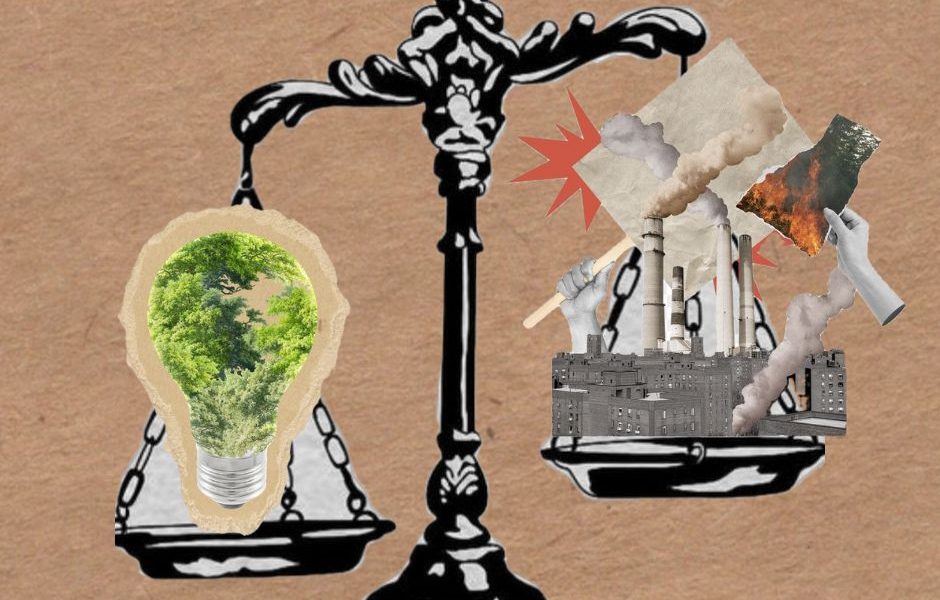
In November 2025, the Supreme Court of India delivered a review judgment in Confederation of Real Estate Developers of India (CREDAI) v. Vanashakti which fundamentally altered the trajectory of environmental compliance in the country. This ruling recalled a previous May 2025 stay that had frozen the process of granting ex-post facto environmental clearances. This blog argues that this reversal is not merely a procedural correction. It is part of a wider jurisprudence in India that struggles to reconcile the rigid logic of the Precautionary Principle with the irreversible reality of physical development.
The Precautionary Principle as a Foundation
Environmental governance in India finds its roots in the Environment (Protection) Act, 1986, and the subsequent Environmental Impact Assessment (EIA) Notifications of 1994 and 2006. These frameworks are designed to be strictly ex-ante, establishing a regime where the state must anticipate and mitigate environmental harm before it occurs. This forward-looking scrutiny is the operational pathway for the Precautionary Principle. The principle was first introduced in Vellore Citizens Welfare Forum v. Union of India. It requires taking protective action to prevent serious environmental damage, even before ascertaining 100% scientific proof of the danger. It mandates that where even threats of serious or irreversible damage exist, full scientific certainty for such damage is not necessary. Any scientific doubt shall not be used as a reason for postponing cost-effective measures to prevent potential environmental degradation.
This section analyses how the this Principle has been treated as a non-negotiable prerequisite for industrial legality. In the original May 2025 Vanashakti ruling, the Court held that ex-post facto clearances were “an anathema to the rule of law”. This view held that once a project had commenced, the baseline conditions of the site would get altered permanently. Hence, if environmental damage of any scale occurred, it would be difficult to restore the land to its original position. This permanence of damage had necessitated appropriate measures to protect the land, bringing into picture the precautionary principle.
However, the review majority problematised the issue. While the Court acknowledged the ex-ante spirit of environmental law, it reasoned that the Precautionary Principle must not become a tool for economic paralysis. The court appears to have concerns about the adverse implications of a strict application of the precautionary principle on development. Justice Gavai explains this on three different accounts, firstly, wasting public money; secondly, protecting livelihoods; and lastly, preventing more pollution. Hence, the court has now re-evaluated the conceptualisation of the principle itself. It suggests a shift from it being a cornerstone of environmental jurisprudence to simply a factor to be weighed against the social utility of the project. Thus, the Precautionary Principle is increasingly being treated as a flexible standard rather than a strict prohibitory rule in the face of completed infrastructure.
Locating the majority’s evidence and its defects
The Review majority, led by Chief Justice B.R. Gavai, identified specific procedural grounds to conclude that the May 2025 ruling was per incuriam. In legal theory, a judgment is per incuriam when it is rendered in ignorance of a binding authority or central statutory provisions that would have led to a different conclusion. In this case, the majority claimed that the original bench ignored the operative orders of co-equal benches. However, beyond these doctrinal discrepancies, the Court was moved by a more profound public interest defect. As discussed by Justice Gavai, the demolition of a 962-bed hospital or a greenfield airport represents a destruction of public wealth that the Court deems unconscionable. Justice Chandran, in his concurrence, observed that directing a demolition only to have the project proponent apply for a fresh clearance is akin to setting the clock back to save time. It would ultimately be an exercise in futility serving neither the environment nor the economy. Thus, the Court used this public interest defence, effectively immunizing completed projects from the harshest consequences of environmental non-compliance, that is demolition.
However, by invoking the defence of shielding ₹20,000 crore in industrial assets, the Court seems to prioritise economic safety over ecological autonomy. This shift is deeply unsettling on two accounts. Firstly, it risks transforming a mandatory safeguard into a mere remedial tax. Rather than destroying public projects, thus rendering the money wasted, a better alternative that is proposed is the regularisation of these projects. This means that projects without prior ECs can be given legal status after the payment of a fine. This argument was also used in Bindu Kapurea to protect medical facilities despite the illegal felling of trees, claiming that reversing such action was practically untenable. Such a view diminishes the value of the precautionary principle. It suggests that if the firms have enough capital to pay the fine, then it is not mandatory to obtain an EC or stop an activity before it causes serious harm. Hence, the law becomes merely a suggestion rather than a command.
Secondly, this choice also reflects a cartesian detachment approach taken by the court. It views nature as an external entity devoid of moral standing. It reduces the environment to a mechanical object managed solely for human advantage. The Court treats finished massive infrastructures as a certainty that justify bypassing essential ex-ante scrutiny. Thus, when the court chooses to regularise a finished project, it assumes that environmental damage is just a technical urban problem that can be fixed with money. It ignores the intrinsic worth of nature. This also results in an anthropocentric ruling, where human interests are placed before ecological concerns. This dissent has been rightly used by Justice Bhuyan who warns that using the exchequer as a shield is a step in regression. Justice Singh made a similar argument in the Ganga Pollution Case by highlighting that health and ecology have greater importance than unemployment or revenue. However, recent trends show the Court reverting to a paradigm that prioritises human convenience.
The Failure of Balancing
A central critique of the Vanashakti review lies in its perceived failure to productively synchronise the Precautionary Principle with the Polluter Pays Principle. The concept of polluter pays imposes the financial burden of environmental damage on the responsible party rather than passing it on to the taxpayer. The review majority relies on this principle of fines as a substitute for the precautionary principle of obtaining prior clearances. However, by permitting an enterprise to operate without a prior EC and then regularising it upon the payment of a fine, the court risks institutionalising a license to pollute for those with the capital to afford the penalty.
As Justice Bhuyan notes in his dissent, the Polluter Pays Principle is fundamentally a principle of reparation and cannot serve as a substitute for the preventative mandate of the Precautionary Principle. It also risks the creation of a two-tiered system of justice. One is where small-scale non-compliance is met with closure, and another where large-scale violations are met with remedial measures. It reflects the doctrinal conflict between prevention and reparation, concluding that the Court’s current balancing favours economic finality over ecological integrity.
The review majority tried to counter this by adopting a balanced approach derived from Electrosteel Steels, where the establishment’s contribution to the national economy and the livelihoods of thousands of workers were weighed against technical irregularities. However, this balancing act is structurally flawed. This is because the EIA process requires such public consultation and impact reports to be antecedent to operations. These reports and consultations are there to give people a real voice in the decision-making process, before the actual work starts. If these reports are assessed after the projects are finished, the law becomes just a mechanical exercise. At that point, the process becomes more of damage control and less of planning. I contend that this approach demotes the Environment (Protection) Act to a set of suggestions rather than a set of mandates.
Conclusion
In conclusion, the judgment represents a triumph of judicial pragmatism over doctrinal purity. It thus leaves the very basis of the environment regulatory regime in a state of dangerous uncertainty. The Court often speaks the language of environmental idealism while rendering orders that favour economic stability. This reconstruction of the judicial approach risks a breakdown of the very structure that ensures compliance. If the Court continues to use its Article 142 powers to rescue violators, the statutory requirement for ex-ante scrutiny will inevitably become a mere administrative hurdle rather than a substantive safeguard. Thus, these clearances must be treated as truly rare and constrained exceptions to prevent the law from being viewed as a mere cost of doing business.
Author Bio – Pratibha Sharma is a First Year BA LL.B. student at NALSAR, Hyderabad.
[Ed Note: This piece was edited by Tanvi Chhabra and published by Vedang Chouhan from the Student Editorial Team.]