

Introduction
Fixed-Term Employment (“FTE”) has emerged as an important feature of India’s labour regulation framework, which provides for flexibility for employers while ensuring limited protection for workers. Under the Industrial Code, 2020 (“IR Code”), which has now been brought into force along with Industrial Relations (Central) Rules, 2025, FTE has been defined as an “engagement of a worker on the basis of a written contract of employment for a fixed period.”
The definition of FTE itself provides certain protections to employees engaged in this form of work. First, the “work, wages, allowances, and other benefits” are mandated to be equitable to a permanent worker engaged in a similar nature of work; second, these workers are eligible for “all statutory benefits available to a permanent worker proportionately according to the period of service rendered by them, even if their period of employment does not extend to the qualifying period of employment required in the statute”; and lastly, they are “eligible for gratuity if they render services under the contract for a period of one year.”
Although the definition is appreciated for providing parity to some extent between temporary and permanent employees, a closer reading and an examination of the ground reality of some specific industries would reveal critical gaps. The parity envisioned under the definition applies only during the subsistence of the contract, while termination and renewal remain outside its scope. It is recognised that it is not possible to ensure a parity between fixed-term and permanent employment on all counts, particularly given the need for flexibility in hiring. However, the lack of minimal procedural safeguard governing non-renewal leaves room for potential misuse, allowing employers to avoid obligations under other welfare laws, especially in cases where workers develop disabilities during the course of employment.
The existing literature engages in the critique of FTE and its current form as incorporated into the IR Code, as a measure that grants employers the weapon of “hire and fire”, allows them to circumvent obligations like retrenchment benefits upon non-renewal, and exploitation of workers who lack bargaining power. However, the gap which has not been addressed yet is the onset of disability as a temporary worker and how the employer can easily circumvent the welfare legislation, which only takes into account permanent employees.
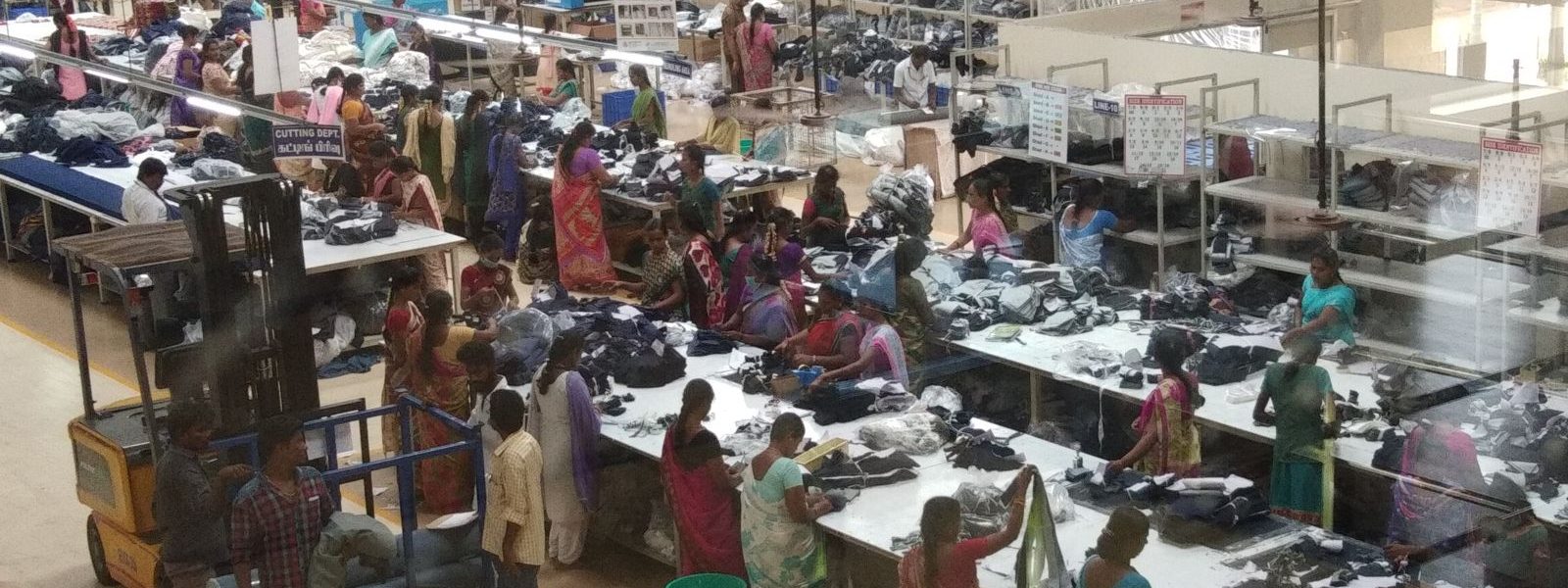
In order to address this gap, this blog critiques the definition of FTE in its current form as a part of the IR Code, demonstrating its inadequacy in protecting disabled workers. In order to illustrate the potential consequences of this inadequacy, the analysis refers to apparel and leather industry, where the prevalence of workers developing disorders coincides with widespread use of FTE. Finally, the author concludes with recommendations for amending the definition itself.
The Termination Loophole
When the concept of FTE was introduced by a notification by the Central Government released in February 2017, however, it was limited to the apparel industry. It was extended to a few other sectors, like the leather industry, in January 2018. This concept was extended to all sectors in order to promote ease of doing business by the Industrial Employment (Standing Orders) Central Amendment Rules, 2018. The benefits extended to temporary workers in these amendment rules are intact in the definition employed by the IR Codes as well. However, these provisions are limited to providing protection during the course of employment and do not take into account the termination of these workers upon non-renewal of their FTE agreement.
The author in this regard argues that, as employers are not obligated to furnish the notice and reason of termination in case of non-renewal of the agreement, in a situation where such a worker develops a disability in the course of their employment, they can simply be removed by non-renewal of the agreement. This is in contrast with permanent employees. Permanent employees who acquire a disability during service are protected. Their services cannot be terminated or reduced in rank; they must be accommodated in another post with full pay and benefits if unable to perform their original duties, or continued on a supernumerary post until superannuation.
Thus, while permanent workers are guaranteed continuity of service and protection of rights even after acquiring a disability, fixed-term workers remain vulnerable to silent exclusion through non-renewal. This will not apply to the case where the employee is a temporary worker, as the law mandates equal treatment of temporary workers with respect to social security benefits at par with permanent workers only when they are employed. If their services are suspended as the contract is for a fixed term, which is the whole purpose of this type of arrangement between the employer and employee, the employer will merely not renew the contract post that person develops a disability, and no justification will be required from the employer’s end. Thus, the issue of a fixed-term employee becomes important to discuss in the context of termination specific to the workers who develop physical disabilities during the course of their employment.
Onset Of Disability During FTE
The problem explained in the previous section, coupled with the fact that the industries in which FTE is the most prevalent, like the apparel and leather industry, are known to cause work-related musculoskeletal disorders (“WMSD”s) amongst their workers, makes this issue even more pertinent. WMSDs are conditions in which the work environment and performance of work contribute significantly to the condition and/or the condition is made worse or persists longer due to work conditions.
WMSDs are considered disabilities and a part of the discourse on disability. It has been studied that the majority of workers who develop disabilities associated with WMSDs do not return to work, and their productivity as manual labour is considerably lower. Keeping in mind all these factors, it is highly likely that workers who develop such physical disabilities are terminated by means of non-renewal and are left with no remedies.
A counterargument that may be proposed with respect to the problem highlighted by the authors can come from the case of Pramod Kumar Tiwari v. Hindustan Fertilizer Corporation Ltd. In this case the it was widely acknowledged that an individual who has worked for an employer for more than seven years, even if through renewals and fixed-term contracts, would be considered a permanent employee, and the practice of not providing them with the benefits of retrenchment must be avoided. While such rulings provide ad hoc relief, they fail to address the core problem, the arbitrariness of relying on tenure length as a measure of permanence. Disabilities such as WMSDs may develop within a few years of employment, long before a “seven-year” threshold is crossed. The judicial approach thus falls short of addressing the vulnerability of fixed-term workers who lose employability due to occupational disability.
Way Forward
As established in the earlier parts of the paper, the current definition of FTE under the IR Code is structurally inadequate in addressing the vulnerabilities of workers who develop disabilities during the term of employment and are prone to termination due to the same.
In order to tackle the same, it is suggested that, along with the parity provided in the definition with respect to employment and social benefits during the fixed term, the parity should extend to the use of non-renewal of agreement as a means to defeat protections available under other labour or welfare statutes. While it is recognised that the model of FTE is to ensure flexibility for the employer, what is problematic is that it is used to deprive workers of their welfare rights. Only in those situations must a mandate be applied.
The authors propose amending the definition to add proviso (d) to Section 2(o) of the IR Codes, 2020, which is proposed to be drafted as such:
“(d) he shall, where he acquires a word-related disability arising out of and in the course of employment during the period of his employment, including but not limited to work-related musculoskeletal disorders, be deemed to have his contract renewed for the purpose of granting reasonable accommodation and protection from retrenchment as mandated under the Rights of Persons with Disabilities Act, 2016, or similar legislation, unless the employer demonstrates a substantive justification for non-renewal that is wholly unrelated to the acquired disability.”
By embedding this protection within the primary definition of FTE, the IR Code would ensure that the concept is used as a genuine mechanism for fixed-term engagement, not as a tool for economic dispossession of workers who become disabled due to workplace hazards.
However, besides protecting fixed-term workers against arbitrary non-renewal, it is equally important to address the broader vulnerability of workers who develop and suffer from WMSDs. The existing compensation framework fails to factor in the unique nature of such disorders. Under Section 2(28) of the Code of Social Security, an “employment injury” is defined as a personal injury caused by accident or an occupational disease. The compensation for occupational diseases is also tied to the list of diseases specifically mentioned in Schedule III of the Code on Social Security. However, WMSDs are not generally recognised in the Schedule.
An additional challenge is posed by the nature of WMSDs. Unlike accidental injuries, these disorders develop gradually due to repetitive strain, poor ergonomics or prolonged exposure to physically demanding work conditions. The absence of a single identifiable accident may complicate the establishment of a direct link with employment, thereby limiting the worker’s ability to claim compensation.
Noting the structural gap, it is proposed that WMSDs be specifically recognised as employment injuries under the Code of Social Security. This will ensure that works, regardless of their employment status, are entitled to claim compensation for loss of earning capacity due to workplace-induced disorders.
Conclusion
The legislative gap embedded within the definition of FTE poses a serious threat to the welfare and job security of vulnerable workers in India. Fixed-term workers are vulnerable as they are often uneducated and possess minimal bargaining power. Due to this, they tend to be unaware of the physical and occupational hazards inherent in their work. The loophole highlighted in this blog remains largely overlooked, particularly within the broader discourse on disability. Additionally, the inadequacy of recognising WMSDs as a basis of providing compensation to workers, further compounds this vulnerability. Taking together, these gaps underscores the complex intersection between the exploitation of disabled workers and the inadequacies of India’s labour law framework. Addressing such gaps requires a nuanced interlinking of both labour and disability discourses. Against this backdrop, this blog seeks to strike a balance between the employer flexibility envisaged under the concept of FTE and the protection of workers’ fundamental rights of workers while also contributing to the growing scholarship on the insufficiency of current labour laws in addressing disability-related concerns.
Author Bio: Pragya Mittal is a third-year student at the National University of Juridical Sciences, Kolkata. Her research interests include commercial law, constitutional law, arbitration and public international law.
[Ed Note: This piece was edited by Arnav Mathur and published by Vedang Chouhan from the Student Editorial Team.]