
Background
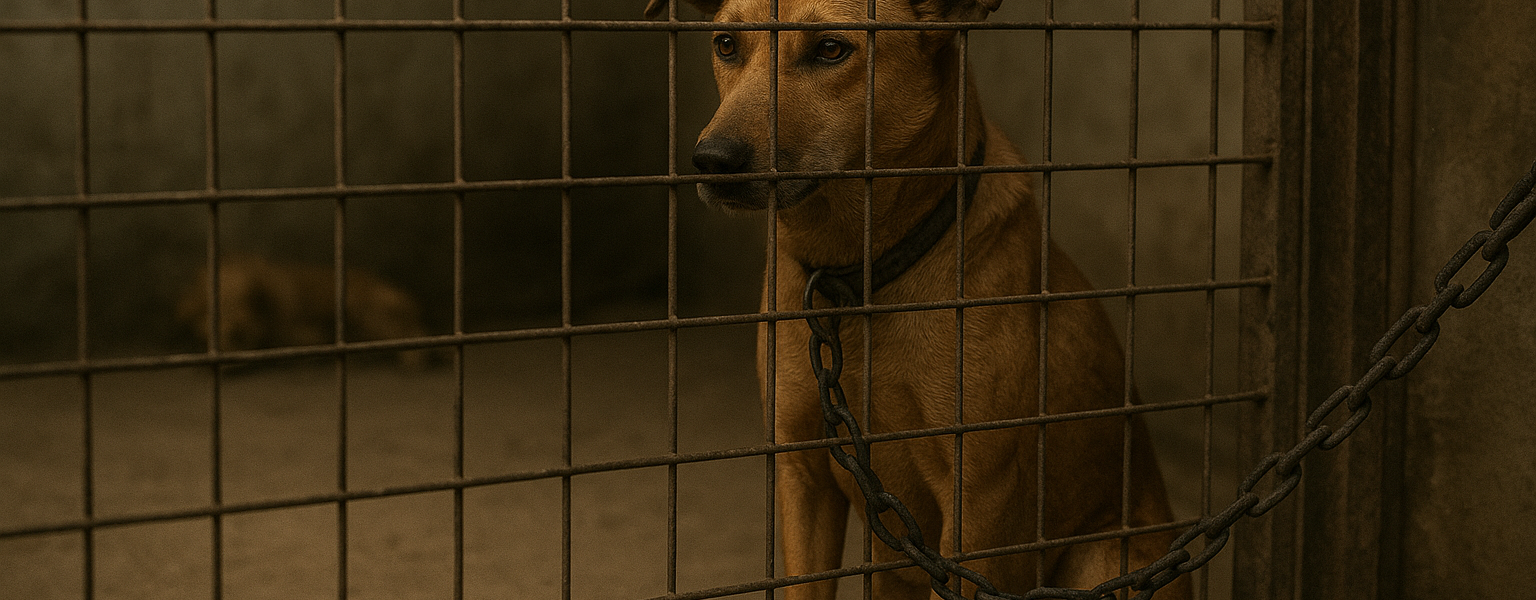
In August 2025, the Supreme Court of India passed an order directing the immediate capture of stray dogs in Delhi-NCR, and their removal (to shelters and pounds) with a direction that they be removed from the streets permanently. After wide protests by animal rights activists, the order was modified to say that the stray dogs must be sterilised, vaccinated, and sent back to where they came from, unless the dog is rabid or very aggressive and needs to be quarantined or sheltered. The Court also made it illegal to feed stray dogs in public, and municipalities had to set aside special feeding areas to reduce conflict.
This piece argues that this decision of the Supreme Court is a part of the wider jurisprudence in India surrounding animal right that lacks imagination and is based on the obsolete theory of Cartesian detachment, which has now been replaced by more integrated approaches worldwide. After a brief description of the Cartesian detachment, this article analyses the recent judgment in light of this framework. Subsequently, the article elaborates on the alternative frameworks that are available and concludes by suggesting how such frameworks could change the way we perceive animal rights in India.
Cartesian detachment
In “Discourse on the Method” (Part V), Descartes presents this dualist theory, which separates the mind from the body. The body operates similarly to a machine, adhering to mechanical functions governed by physical laws. While all animals have a body, only humans are distinguished by the possession of an immaterial soul, a thinking, conscious entity that is separate from the body. This idea was termed Cartesian detachment. Grounded in mind-body dualism, it thinks of human beings as exclusively rational entities, disengaged observers and managers of nature. Only human beings in this worldview are thought to have true intelligence and moral faculties. All other entities, such as animals are reduced to the level of mechanical objects to be observed, to be classed, to be controlled mainly for humankind’s advantage. This position provided humankind’s morality and legality to use animals for their benefit without any sense of ethical concern.
Cartesian detachment is foundational to much of modern environmental law, instilling:
- The centrality of human interest.
- Normalising the use and misuse of the natural environment, including plants, mountains, rivers, and animals.
- Legal validation of interventions and changes in nature without scrutiny for their ethics.
How the Supreme Court Order Demonstrates Cartesian Detachment
The Court acts like a detached, rational decision-maker in charge of keeping order and safety by keeping an eye on urban animal populations. Policies like sterilisation, vaccination, and controlled feeding zones aren’t based on what animals need; instead, they are based on what people think is best for them. This is similar to Descartes’ idea that only humans have reason and need to control nature as an object. The Court doesn’t think of the street dog as a living thing with its own worth. Rather, it sees street dogs as urban problems that need to be solved, like machines whose behaviour can be controlled, watched, and directed.
The Court says that Article 21’s citizens’ right to life and safety is more important than animals’ right to be free. This anthropocentric ordering exemplifies Cartesian dualism: humans as moral authorities possessing rights, and animals as recipients of those rights. Animal autonomy is absent, and public safety dominates the discussion. It is generally accepted that the prescribed interventions of capture, sterilisation, and relocation are normal and legal. In a Cartesian view, animals have no right to agree to or take part in decisions that affect them, so intervention is the default way to govern. This normalisation of control shows how deeply ingrained detachment is in our culture.
Critique and Emerging Ethical Choices
In sharp contrast to the underlying assumptions of the Cartesian detachment, principles of harmony, balance, and non-violence towards all living beings are found in a range of non-Western environmental philosophies and ethical traditions, such as Jainism and Hinduism. Thinkers who challenge Cartesian dualism contend that this sort of thinking is ethically impoverished. Rather than separating humans from nature, proponents of an ecological ethic argue for the equal value of animals and the natural world. These philosophers deny that living beings can be thought of as machines, and argue that moral consideration must include all forms of life. Many academic and activist scholars have challenged the Cartesian view, particularly as they engage issues of ecological menace that we face today.
This inclusive framework has largely been ignored in the Indian jurisprudence, aside from a few notable cases like Animal Welfare Board of India v. A. Nagaraja & Ors. (2014) in which the Supreme Court acknowledged that the animals have right to live with dignity which is protected by law and cruelty against animals is prohibited by law. Similarly, the in Naveen Raheja v. Union of India (2001), the Court condemned cruelty to captive tigers, and stated an ethical commitment to animals’ welfare, that extended beyond their use as objects and exploitation.
However, these judgments are the exception rather than the rule, and the Supreme Court’s treatment of street dogs reflects a limited incorporation of that ethical consideration. The decisions continue to represent a Cartesian stance with human rationality as sovereign and nature as a thing to be controlled.
An authentically integrated ethical response would shift the Court’s response away from the Cartesian detachment of stray dogs being a public health issue. It would not treat mass sterilization and confinement to be an end in and of itself, rather any action would be required to have an ex ante independent animal welfare audit. It is time that we implement the U.S. model of animal control officers. In this model, Animal Control Officers (ACOs) have been given local and state authority to address complaints of cruelty, enforce licensing laws, and respond to stray or dangerous animals. Their work is a blend of enforcement capacity and educational role that creates a system of accountability for the care of both humans and animals. India could follow a similar model by formalizing ACOs who are trained as part of the local governance structure with limited police powers and a connection to municipal veterinary services. England’s “Five Freedoms” framework represents a shift in policy thinking from one of managing populations to animal welfare: the freedom from hunger and thirst; discomfort; pain, injury or disease; fear and distress; and the freedom to express normal behaviour.
If we view how Indian urban animal management might adopt frameworks such as this, it would significantly change the municipal action from a numbers-based, control paradigm, to one of enforceable duties: safe accommodation, active veterinary supervision, transparency of observations and monitoring, legal personhood for animals.
Conclusion
Animal treatment through the law today is still anchored in Rene Descartes’ Cartesian detachment theory where human rational souls are separated from the mechanical natural world. The descendants of this legacy are best illustrated in the Supreme Court’s 2025 stray order, which is human centered in approach with public safety and reasonable control prioritized. The Supreme Court must set aside the legal artifice of animal objecthood and align Indian policy with these internationally accepted norms, thereby transforming in a comprehensive way legal logic and bureaucratic logic, focusing on animal dignity, ecological balance, and transparency, rather than on anthropocentric exercise of control.
Mayuri Tumdam is a final-year student at Dharmashastra National Law University, Jabalpur. Her areas of interest include constitutional law, criminal law, and socio-legal research.
[Ed Note: This piece was edited by Hamza Khan and published by Vedang Chouhan from the Student Editorial Team.]