
The Supreme Court’s split decision in this case raises some interesting issues. In this article, I touch upon two such issues within the limitations of space. One is why the CJI has never been in a minority. I would agree that the CJI being in a majority in most cases cannot be just a coincidence. But I am equally intrigued what could convincingly explain this phenomenon. The second issue is what I think many have missed in this debate – except those campaigning against death penalty. When the Supreme Court admitted Sangma’s petition against Mukherjee, should it not have restrained Mukherjee from taking irreversible decisions till it disposed the petition?

P.A.Sangma vs. Pranab Mukherjee
Further reading

This article examines India's Digital Personal Data Protection Act 2023, focusing on the adequacy of its consent-based framework as the primary mechanism for privacy protection. It discusses...

This article examines the Supreme Court’s 2025 judgment on the Aravalli Hills and Ranges, focusing on the Court’s effort to resolve the long-standing definitional ambiguity surrounding the ecosystem...
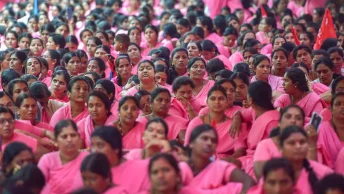
The article is divided into two parts. Part-I seeks to establish that ASHA workers fulfil conditions to be recognised as workman under the IRC. Part-II aims to show how the feminisation aspect...
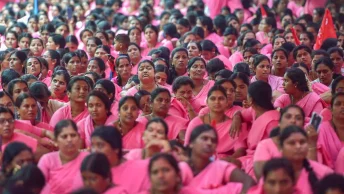
The article is divided into two parts. Part-I seeks to establish that ASHA workers fulfil conditions to be recognised as workman under the IRC. Part-II aims to show how the feminisation aspect...

Summary: The article analyses the case of Hari Devageeth v Union of India. It highlights the conflict faced by the court between two constitutional rights: a transgender man’s right to bodily...
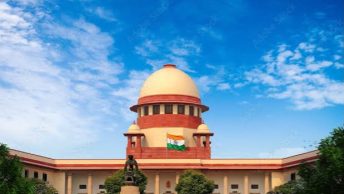
Introduction The fifth panel highlighted the multi-faceted dimensions of behavioural accountability within the Indian Judicial system. Moving beyond the constitutional frameworks, the panelists...