
Today’s Times of India carries the latest expose by Manoj Mitta on Mashelkar. The previous ‘victim’ says Mashelkar is irresponsible, if not dishonest. I would like to know Shamnad Basheer’s comment.

Latest expose on Mashelkar
Further reading

This article examines India's Digital Personal Data Protection Act 2023, focusing on the adequacy of its consent-based framework as the primary mechanism for privacy protection. It discusses...
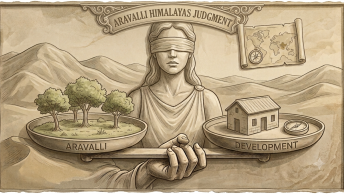
This article examines the Supreme Court’s 2025 judgment on the Aravalli Hills and Ranges, focusing on the Court’s effort to resolve the long-standing definitional ambiguity surrounding the ecosystem...
The article is divided into two parts. Part-I seeks to establish that ASHA workers fulfil conditions to be recognised as workman under the IRC. Part-II aims to show how the feminisation aspect...
The article is divided into two parts. Part-I seeks to establish that ASHA workers fulfil conditions to be recognised as workman under the IRC. Part-II aims to show how the feminisation aspect...

Summary: The article analyses the case of Hari Devageeth v Union of India. It highlights the conflict faced by the court between two constitutional rights: a transgender man’s right to bodily...
Introduction The fifth panel highlighted the multi-faceted dimensions of behavioural accountability within the Indian Judicial system. Moving beyond the constitutional frameworks, the panelists...
Dear Venkatesan,
Thanks for pointing this out to me. I know Dr Dutfield— he is a very respected academic in the UK and writes some fabulous stuff. Its unfortunate that his paper has been plagiarised. Certainly a far more serious charge than the earlier one –which I didn’t think was “plagiarism” anyway, not least because I had made a submission to the Committee for the very purpose of hoping that the Committee would rely on it. Secondly, the committee had included all that they “borrowed” from me in an Annexure to the Report, indicating indirectly that I was the source. Thirdly, what the Committee borrowed were mere conclusions. Given these circumstances, I’m not sure if you could call it “plagiarism”, which somehow connotes a calculated move to hide your source and pass stuff as your own. And given the allegation that the Committee sold out to Western multinational firms, I think a “plagiarism” charge would indicate that they cleverly hid their source since they were trying to further the interests of these firms. Which is why I think some people are very keen on labelling this as “plagiarism”. I would put it down to “sloppy” drafting–not expected of a Committee with so many reputed members.