
This has got to be one of the most interesting back-and-forth during a Supreme Court argument. Gone are the days of judges passively listening to senior advocates drone on and on. This bench, at least, seems to be in a combative mood.

A Lakhman Rekha for The Judiciary
Further reading

This article examines India's Digital Personal Data Protection Act 2023, focusing on the adequacy of its consent-based framework as the primary mechanism for privacy protection. It discusses...

This article examines the Supreme Court’s 2025 judgment on the Aravalli Hills and Ranges, focusing on the Court’s effort to resolve the long-standing definitional ambiguity surrounding the ecosystem...
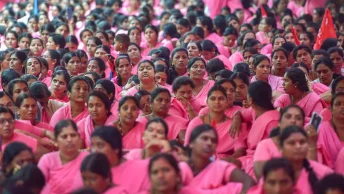
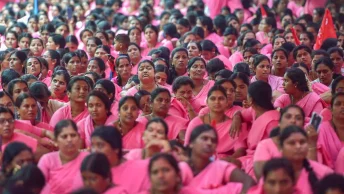
The article is divided into two parts. Part-I seeks to establish that ASHA workers fulfil conditions to be recognised as workman under the IRC. Part-II aims to show how the feminisation aspect...
The article is divided into two parts. Part-I seeks to establish that ASHA workers fulfil conditions to be recognised as workman under the IRC. Part-II aims to show how the feminisation aspect...

Summary: The article analyses the case of Hari Devageeth v Union of India. It highlights the conflict faced by the court between two constitutional rights: a transgender man’s right to bodily...
Introduction The fifth panel highlighted the multi-faceted dimensions of behavioural accountability within the Indian Judicial system. Moving beyond the constitutional frameworks, the panelists...
It is very sad to see that such ludicrous arguments are advanced by the Senior Advocates in the Supreme Court. Article 142 of the Constitution of India provides enormous powers to the Supreme Court to take up such steps as are necessary to meet the ends of justice. Those who always talk about Lakshman Rekha are timid and Luddites. If the Supreme Court had failed to evolve certain novel methods like the PILs to address the problems of the general public, the society would have, by now, been festering with stinking rots. Lakshman Rekha is meant for those who indulge into wrongdoings and they are not supposed to cross it. But take an example: Traffic lights should not be violated is a general rule, however, if a dacoit is escaping after looting somebody, then in that case whether the policemen should wait for the traffic light to turn green or simply jump the red light and catch him? Policeman should be awarded for apprehending the culprit or be punished for violating the signal? Obviously, any right thinking would support the cause espoused by the policeman instead of delving deep into technicalties.
Parmanand Pandey, Advocate