Rajya Sabha has just begun the process of removal of Justice Soumitra Sen with Sitaram Yechury speaking on the motion. The debate can be watched live from here. The Report of the Inquiry Committee and the text of the motion can be read at the Primary Sources Page. Here is a video record for Aug.17. The verbatim record of the RS proceedings can be read here, here, and here. After Justice Sen presented his defence, the Leader of the Opposition, Arun Jaitley began to speak on the motion, and has not yet concluded. The debate will resume at 2 p.m. tomorrow.
Kindly also publish the second part of the debate which took place on 18th of August in the Rajya Sabha. The debate was nothing but the history in the making. It was very heartening to see our parliamentarians rising to the occasion. It was a rare debate indeed, sort of which are not seen often in the Indian Parliament. Parliamentarians showed solemnity and sobriety befitting to the role of the judge and they deserve our kudos. It was, in fact, a delightful experience to watch and hear the arguments of Justice Soumitra Sen in radiant English, sterling eloquence of Arun Jaitley and superb presentation of Sitaram Yechury in flawless and coherent style, really an envy of any advocate. The speeches in the Rajya Sabha were undoubtedly comparable to the speech of Edmund Burke at the time of the impeachment of Lord Clive in the House of Commons. The verbatim text of the debate will be immensely useful for teachers, advocates, judges and researchers alike. As Burke's speech has acquired the exalted position of literary piece because of the language, sarcasm, wit and aphorisms, similarly some of the speeches in the Rajya Sabha would certainly stand out for the incisive logic, articulation and finesse of language (English and Hindi both) of the members. What was even more commendable was the unprecedented patience of otherwise impatient members, who heard the speeches of others with rapt attention. This, perhaps, is going to be the first impeachment in the independent India. Right or wrong would be analysed and decided by the historians in the coldness of time but for the present it must be savoured by all in its entirety.
Summary: The article analyses the case of Hari Devageeth v Union of India. It highlights the conflict faced by the court between two constitutional rights: a transgender man’s right to bodily...
Introduction The fifth panel highlighted the multi-faceted dimensions of behavioural accountability within the Indian Judicial system. Moving beyond the constitutional frameworks, the panelists...
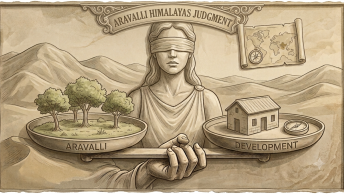
Introduction This report summarises the panel discussion titled “Adjudicating the Environmental Juristocracy,” which examined the trajectory of environmental and animal law jurisprudence...
Introduction The panel paid tribute to Professor M.P. Singh by showcasing his academic work, his role as head of NUJS, and his ability to unite diverse groups in legal education. Dr. Satya Prasoon...
This report summarises the panel discussion on the topic “Special Intensive Revision: Contours and Contents of Citizenship”, during the 7th Edition of the Courts and the Constitution Conference at...
Introduction This panel examined the intersection of constitutional text, institutional practice, and judicial intervention, focusing specifically on the controversies surrounding the exercise of...
Kindly also publish the second part of the debate which took place on 18th of August in the Rajya Sabha. The debate was nothing but the history in the making. It was very heartening to see our parliamentarians rising to the occasion. It was a rare debate indeed, sort of which are not seen often in the Indian Parliament. Parliamentarians showed solemnity and sobriety befitting to the role of the judge and they deserve our kudos. It was, in fact, a delightful experience to watch and hear the arguments of Justice Soumitra Sen in radiant English, sterling eloquence of Arun Jaitley and superb presentation of Sitaram Yechury in flawless and coherent style, really an envy of any advocate. The speeches in the Rajya Sabha were undoubtedly comparable to the speech of Edmund Burke at the time of the impeachment of Lord Clive in the House of Commons.
The verbatim text of the debate will be immensely useful for teachers, advocates, judges and researchers alike. As Burke's speech has acquired the exalted position of literary piece because of the language, sarcasm, wit and aphorisms, similarly some of the speeches in the Rajya Sabha would certainly stand out for the incisive logic, articulation and finesse of language (English and Hindi both) of the members. What was even more commendable was the unprecedented patience of otherwise impatient members, who heard the speeches of others with rapt attention.
This, perhaps, is going to be the first impeachment in the independent India. Right or wrong would be analysed and decided by the historians in the coldness of time but for the present it must be savoured by all in its entirety.
Parmanand Pandey, Advocate