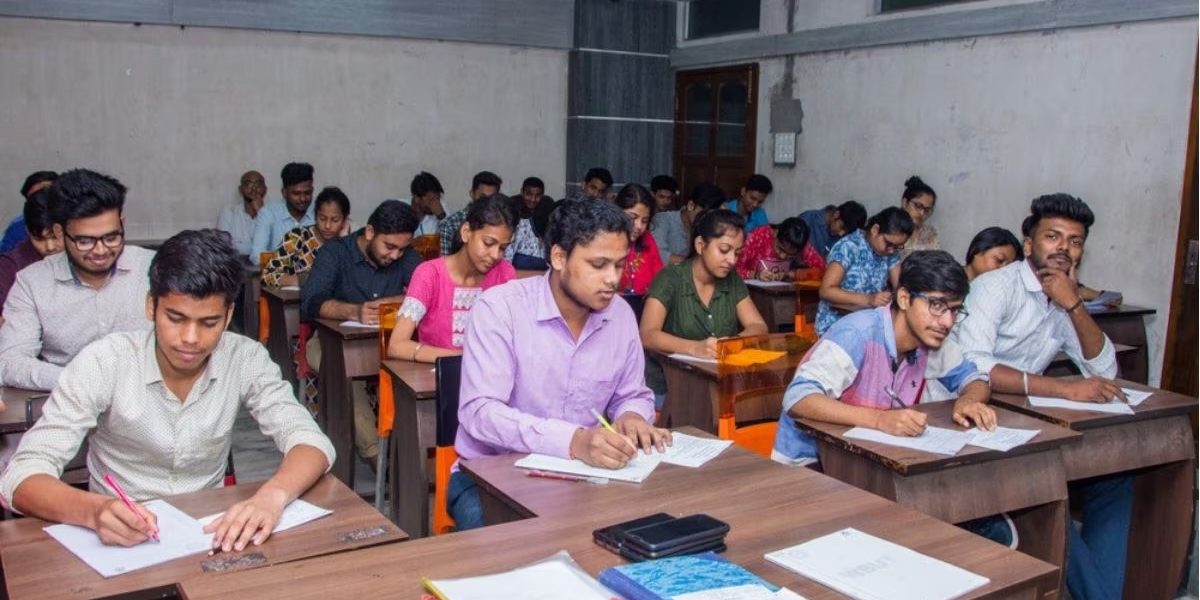

In India, when someone asks a young aspirant, “Are you ready to appear for the exam?”, they rarely mean “Do you have the knowledge?”. What they really mean is: “Do you have the arrangements in place?”. For most students, that translates to books, coaching, and confidence. For people with blindness or low vision like me, it has historically meant something far more basic—begging for the right to take the exam on terms that respect our dignity and independence. Until very recently, the answer to that question was often a humiliating “No,” because the system simply refused to let us write with the tools we use every day: our own computers with screen-reading software.
I am Yash Dodani, an Advocate who is partially blind. In November 2024, I became the lead petitioner in Yash Dodani & Others v. Union of India & Others, [W.P.(C) 785/2024], a case filed before the Supreme Court. It challenged the Bar Council of India (BCI) and the Consortium of National Law Universities (CNLU) on denying candidates with blindness and low vision the option to appear in the All India Bar Examination (AIBE) and the Common Law Admission Test (CLAT) on computer without a scribe. We also challenged the absurd rule that allowed scribes only up to Class 12 level for postgraduate examinations and sought for a change in the rule and to allow scribes who are undergraduate students outside of law and humanities background.
For years, I had watched brilliant blind friends give up their dreams because the examination system treated us as exceptions rather than equals. Every cycle of CLAT and AIBE became a ritual of humiliation: filling endless forms for “accommodations,” hunting for scribes who often knew less than we did, and then sitting silently while someone else wrote our answers—sometimes misspelling legal terms, sometimes adding their own interpretations, sometimes simply getting tired and slowing us down. The screen reader on my laptop, which I use to read judgments, draft pleadings, and live my professional life, was declared “invalid” in the examination hall. Independence was labelled cheating. Dignity was labelled privilege.
This was not just inconvenient; it was a systemic denial of equality. The Rights of Persons with Disabilities Act, 2016, mandates reasonable accommodation and accessibility as fundamental rights. Yet examination bodies continued to treat computer-based testing with screen readers as some futuristic luxury rather than the bare minimum. The message was clear: you may study law, but you may not practice it on your own terms.
When we approached the Supreme Court in November 2024, we did not do so only for ourselves. We did it for every blind or low-vision student who had ever been told, “Manage with a scribe,” as if managing with indignity was our destiny. We did it for the thousands who never file petitions because they are busy surviving families that see disability as destiny, or fighting poverty, or simply trying to convince examination centers that JAWS or NVDA is not a “gadget” but an extension of our eyes.
From the very first hearing, the Bench displayed remarkable sensitivity. Instead of treating us as yet another “disability case,” the Court asked pointed questions: Why can’t a blind candidate use the same technology she uses to clear her university exams? Why must postgraduate scribes be less qualified than the candidate herself? Why are examination bodies still functioning as if the RPWD Act was never passed?
The Court began passing a series of transformative interim orders. It directed immediate experiments with computer-based testing in controlled environments. It pulled up authorities for their “one-size-fits-all” approach. It reminded the Union of India that accessibility is not charity—it is a constitutional mandate under Articles 14, 15, 19, and 21. The directions of the Supreme Court in December 2024 helped me and four other graduates to clear the AIBE by using a computer with screen reader – the first batch of AIBE aspirants to do so.
The pressure built. And then, on 01.08.2025, the Ministry of Social Justice and Empowerment issued comprehensive new Guidelines on Examination Accessibility for Persons with Blindness and Low Vision. The guidelines explicitly recognized the right to use computer with screen-reading software (without internet) as a valid mode of examination. They abolished the Class 12 cap on scribes for postgraduate exams. They mandated that all national-level entrance and recruitment examinations must offer computer-based testing as an option from the 2026 cycle onward. These were issued in direct response to our litigation as has been noted in the order dated 13.08.2025.
The ripple effect was immediate and extraordinary. In the case of Mission Accessibility v. Union of India & Another, the Union Public Service Commission appeared before the Supreme Court and principally agreed to implement computer-based testing with screen readers for the Civil Services Examination and all other exams conducted by it, beginning with the 2026 cycle. The UPSC undertaking, placed on record, marked perhaps the most significant victory for disability rights in Indian competitive examinations.
Yet this is not just about technology. It is about dignity restored.
For the first time, a blind candidate will walk into an examination hall carrying nothing but her laptop—exactly the way she studies, exactly the way she works, exactly the way she lives. No more begging strangers to write for us. No more explaining to invigilators that refreshable Braille displays are not “electronic devices” but our eyes. No more watching our ranks plummet because a scribe got tired after three hours. No more choosing between accuracy and speed because someone else is holding the pen.
This judgment and the guidelines it birthed have done something even more profound: they have shifted the default setting of Indian examinations from exclusion to inclusion. Where once accessibility was an afterthought, it is now a non-negotiable precondition. Where once disability was treated as a problem to be “managed,” it is now recognized as a perspective that improves systems for everyone—because an examination that works for a blind candidate inevitably becomes quieter, more structured, and more digitally robust for all.
As we move into the 2026 examination cycle, the impact will be seismic. CLAT, AIBE, CUET, NEET-PG, GATE, NET, SSC, Banking exams, and eventually even state-level recruitment tests will have to fall in line. Examination bodies can no longer hide behind “technical difficulties” or “fear of malpractice.” The Supreme Court has made it clear: if the technology exists and it has existed for decades, then the only acceptable reason for denying it is malice or incompetence, neither of which is constitutionally permissible.
We lost nothing in this litigation except our silence. We gained a future where the question “Are you ready for the exam?” will finally mean what it should: Do you know your subject? The arrangements, the dignity, the independence, the equality are now guaranteed by law.
This is not the end. It is the beginning of an India where disability no longer determines destiny, where the examination hall finally reflects the classroom of real life, and where persons with blindness do not have to fight for the right to be treated as competent adults. Until every examination in this country—central, state, university, professional—offers computer-based testing with screen readers as a default option, our work continues. But for the first time in independent India, the law is on our side, the guidelines are in our hands, and the future is accessible.
Author Bio: Yash Dodani is an Advocate in Karnataka. He graduated with B.A.LL.B (Hons.) degree from NALSAR University of Law, Hyderabad. He was the co-founder of the Accessibility Lab at NALSAR University of Law and continues to work for the disabled community.