
In an article in the current issue of Frontline, I reflect upon the CVC judgment, and the Supreme Court more generally.

The CVC Judgment

Further reading

This article examines India's Digital Personal Data Protection Act 2023, focusing on the adequacy of its consent-based framework as the primary mechanism for privacy protection. It discusses...

This article examines the Supreme Court’s 2025 judgment on the Aravalli Hills and Ranges, focusing on the Court’s effort to resolve the long-standing definitional ambiguity surrounding the ecosystem...
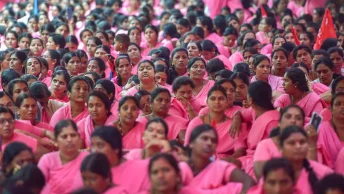
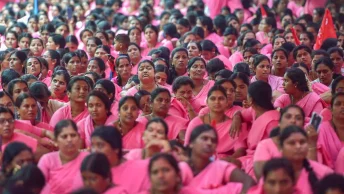
The article is divided into two parts. Part-I seeks to establish that ASHA workers fulfil conditions to be recognised as workman under the IRC. Part-II aims to show how the feminisation aspect...
The article is divided into two parts. Part-I seeks to establish that ASHA workers fulfil conditions to be recognised as workman under the IRC. Part-II aims to show how the feminisation aspect...

Summary: The article analyses the case of Hari Devageeth v Union of India. It highlights the conflict faced by the court between two constitutional rights: a transgender man’s right to bodily...
Introduction The fifth panel highlighted the multi-faceted dimensions of behavioural accountability within the Indian Judicial system. Moving beyond the constitutional frameworks, the panelists...
In curiam
The Apex Court has held the appointment of CVC to be non est as the alleged relevant material of the pending criminal case against him was not considered during his selection. The verdict is grossly in error as the Court has not taken into consideration relevant aspects and that it has placed reliance on irrelevant materials. Firstly, the Court has ignored the mandate of Section 197 of the CrPC that no Court shall take cognisance of an alleged offence against public servant unless the requisite sanction is given. Secondly, the Court has not taken note of the law laid by its Full Bench in Jankiraman’s (Union of India v. K.V.Janakiraman 1991 AIR 2010)case, that a a pending criminal case is not an impediment in being considered for appointment to a higher post so long as sanction for prosecution has not been issued. Hence the Court has fell in error in taking note of the allegations against Mr.Thomas in the chargesheet filed in the trial court and the incompetent sanction issued by the Kerala Government. The Court is wrong in relying on internal notings in the file where no decision has been taken by the Government. The court’s prescriptions on institutional integrity and unblemished or impeccable integrity are inchoate. Impeccable integrity in a public servant is not a cloistered virtue, but robust attribute to be judged from a person’s work and conduct against the ground realities of public administration. The shocking result of the verdict is that it informs the honest civil servants that their legitimate actions are suspicious unless proved otherwise.