
Last week, in Hiralal Harsora v. Kusum Harsora, the Supreme Court held that Section 2(q) of the Protection of Women from Domestic Violence Act, 2005 is unconstitutional to the extent that it defines “respondents” under the Act to only include “adult males” and the relatives of an aggrieved woman’s husband/domestic partner. In effect, the judgment included women and minors within the definition of respondents, such that cases can now be filed against them under the Act. In this post, I argue that women should be exempt from the definition, at least as against their marital relatives. This exemption is based on power differentials within the family – power differentials that structure the occurrence, the subjective experience, as well as the adjudicatory evaluation of domestic violence.

Women as Respondents under the Domestic Violence Act: Critiquing Harsora v. Harsora

Further reading

This article examines India's Digital Personal Data Protection Act 2023, focusing on the adequacy of its consent-based framework as the primary mechanism for privacy protection. It discusses...
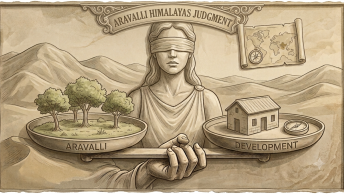
This article examines the Supreme Court’s 2025 judgment on the Aravalli Hills and Ranges, focusing on the Court’s effort to resolve the long-standing definitional ambiguity surrounding the ecosystem...
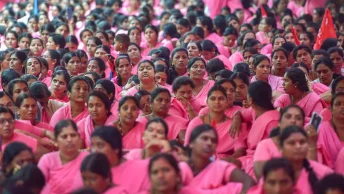
The article is divided into two parts. Part-I seeks to establish that ASHA workers fulfil conditions to be recognised as workman under the IRC. Part-II aims to show how the feminisation aspect...
The article is divided into two parts. Part-I seeks to establish that ASHA workers fulfil conditions to be recognised as workman under the IRC. Part-II aims to show how the feminisation aspect...

Summary: The article analyses the case of Hari Devageeth v Union of India. It highlights the conflict faced by the court between two constitutional rights: a transgender man’s right to bodily...
Introduction The fifth panel highlighted the multi-faceted dimensions of behavioural accountability within the Indian Judicial system. Moving beyond the constitutional frameworks, the panelists...