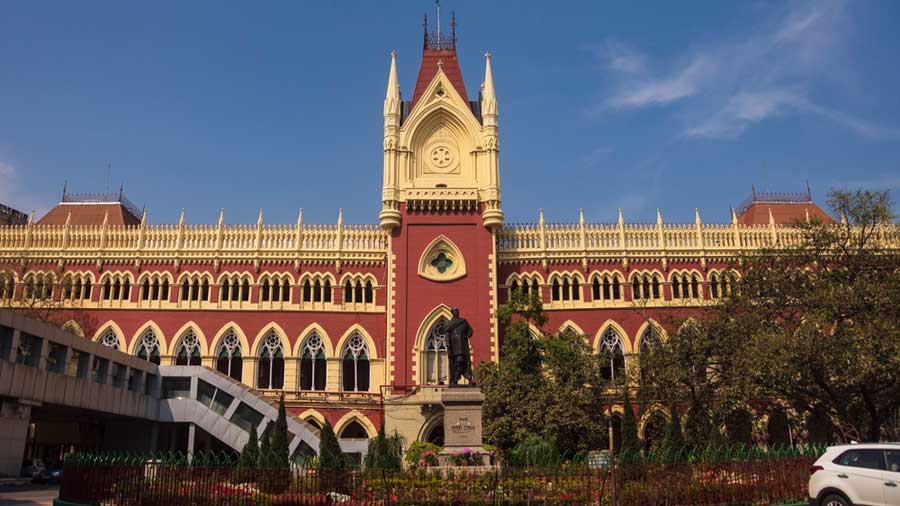
The proposed Constitution (One Hundred and Thirty-first Amendment) Bill, 2026, offered limited gains in bridging inter-state disparities, while also creating uncertainty by turning delimitation into a discretionary exercise. Had the Bill passed, the new provisions would have necessitated institutional changes to Parliament’s functioning and the scope of MPs’ roles to ensure more ‘effective’ representation. Similarly, the expanded Lok Sabha would have also meant an increase in the size of the Executive, increased costs, and an imbalance in the bicameral system.
Institutional Consequences
1. Functioning of Parliament
Members of Parliament in India perform a dual role, participating in legislation through introducing, debating, and voting on bills, while also exercising executive oversight via instruments such as Question Hour and Zero Hour. An expansion in the number of MPs following delimitation would have directly affected both functions, particularly in a context where parliamentary time is already constrained. Sitting days have declined significantly, from an annual average of about 121 days during 1952–70 to roughly 68 days per year since 2000, even as the scale and complexity of governance have increased.
With a larger membership and no commensurate increase in sitting time, the average opportunity for each MP to participate in debates, raise questions, and scrutinise legislation would have declined. This constraint is already reflected in recent parliamentary trends: the total number of notices submitted by MPs from both houses of the parliament has increased from 968,558 during the 14th and 15th Lok Sabha to 1,039,432 during the 16th and 17th Lok Sabha, yet the proportion of admitted questions has fallen from 24.95% to 22.08%. Similarly, legislative scrutiny has weakened, with the proportion of government bills referred to parliamentary committees declining sharply from 69.23% during the 14th and 15th Lok Sabha to 18.29% during the 16th and 17th Lok Sabha. An increase in the number of MPs may have also required either expanding the size of committees or increasing the number of committees to ensure meaningful deliberation.
In the absence of procedural adjustments—such as increased sitting time or more structured allocation of parliamentary business—an increase in MPs was therefore likely to intensify existing pressures, potentially further centralising agenda control within the executive and party leadership and reducing the effective space for individual parliamentary participation.
2. Fiscal Implications
Delimitation has fiscal implications as each MP entails recurring expenditure. This includes salary, allowances, staff support, accommodation, travel, and other facilities. In addition, MPs recommend development projects under the Members of Parliament Local Area Development Scheme (MPLADS). Based on the 2026–27 Budget Estimates, If the number of Lok Sabha MPs and State Legislature MLAs had increased, the additional annual expenditure, assuming proportional scaling for directly elected bodies, would have been approximately about ₹2,947.3 crore per year, which is about 200 crores more than the Budget allocated for the Ministry of Personnel, Public Grievances and Pensions for the FY 2026-27.
3. Executive Size
The size of the executive is determined by constitutional provisions. Article 75 caps the size of the Union Council of Ministers at 15% of the strength of the Lok Sabha, with a similar cap for States. Had the Lok Sabha’s size increased, this ceiling would have risen correspondingly. This did not mandate expansion, but would have allowed greater flexibility in ministerial appointments and created space for new ministries, which in turn could have led to an increase in government job opportunities.
4. Bicameral Balance
The Rajya Sabha is not directly affected by delimitation and remains subject to a constitutional cap of 250 members, with the current strength at 245. If representation were recalculated using the formula adopted by the Constituent Assembly, one representative for every 10 lakh up to 50 lakhs, and one for every additional 20 lakhs, the strength could be as high as 675 based on the 2011 Census (784 based on the 2026 Projections). However, no such revision was proposed.
A larger Lok Sabha alters the balance within the bicameral system. In joint sittings under Articles 108 and 249, the Lok Sabha’s numerical dominance increases. With 850 members, it would have accounted for 850 out of 1095 members (77.63%), compared to 543 out of 788 (68.9%) at present. This would have reduced the Rajya Sabha’s relative weight in such situations.
At the State level, similar effects arise. Legislative Councils, where they exist, are required to have at least 40 members and no more than one-fourth the size of the Legislative Assembly. At present, six States have Legislative Councils, with Uttar Pradesh having the largest. If Assembly sizes had increased, for example, to around 500 members in Uttar Pradesh, its Council could increase to over 125 members. However, no such revision was proposed.
Conclusion
The expansion of legislatures carries unaddressed implications for parliamentary functioning, committee capacity, fiscal costs, and institutional balance. As a result, the proposals yielded incremental improvements but did not resolve deeper structural issues, with their overall impact contingent on accompanying procedural and institutional changes.