-
- Introduction
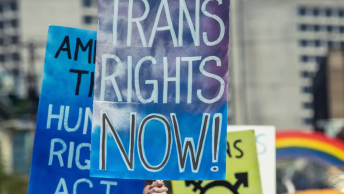
At a traffic signal, a transgender woman claps her hands and says “dua lagegi” (you will receive blessings). A mother quickly hands over a few coins while covering her child’s face. This everyday gesture captures India’s contradictory treatment of its transgender community. Transgender persons exist only within a liminal space wherein they are simultaneously sought after for blessings, yet excluded from all avenues to a dignified livelihood.
This blog uses the term “transgender persons” as an umbrella term while recognizing the rich diversity of various gender identities in India, including hijras, kinnars, aravanis, jogappas, and shiv-shakthis, each with different histories.
The statistics expose the structural mechanisms that make this contradiction possible. The National Human Rights Commission’s 2018 study documented that 96% of transgender persons face employment denial, forcing them into informal survival strategies: 24.44% rely on badhai (ritual blessings), 10.44% on begging, and 4.56% on sex work. By comparison, only 0.033% of the general population engages in beggary. A transgender person is 307 times more likely to be forced into beggary. Even this is a conservative estimate as these statistics rely on the 2011 Census, which is widely considered to be under-reported by as much as 10 times as transgenders were reluctant to disclose their identity before NALSA vs UoI in 2014.
This disparity does not reflect choice, but rather a systematic exclusion from the labor market which is available to all others. In numerous gharanas, transgender persons are often required to begin with begging as a way to later move on to badhai, which is still considered auspicious and societally acceptable.
This blog advances three arguments. First, colonial anti-beggary laws created an enforcement architecture that continues to criminalize transgender survival despite formal legal protections. Second, contemporary jurisprudence has failed to confront how anti-beggary laws disproportionately target transgender persons. Third, meaningful reform requires both immediate amendments to anti-beggary legislation and long-term enforcement of employment anti-discrimination provisions in employment law.
-
- Colonial Legal Architecture and the Manufacturing of Criminality
Pre-colonial India recognized diverse gender expressions. Ancient Hindu texts like the Manu Smriti and Kama Sutra referenced tritiya-prakrti (third nature), while Vedic astrology acknowledged three genders. Communities sought blessings from transgender communities for fertility rituals, childbirth and weddings. More significantly, transgender communities held positions in Sikh, Maratha and Mughal courts as administrators, generals, and advisers, exercising substantial political authority. The cultural framework of bhiksha (alms) in Hinduism and zakat (charity) in Islam provided socially legitimate pathways for those who sought support through ritual giving.
However, British rule transformed this landscape. Colonial administrators, viewing both begging and transgender communities through a Victorian lens of productivity and sexual propriety, created a “moral stigma” about pratices previously honoured in religious and social life.
They disrupted traditional arrangements by reconstructing gender non-conformity as a form of criminal deviance. The Vagrancy Act of 1824 transplanted English ‘poor laws’ rooted in 14th-century labor control and criminalized begging. The Criminal Tribes Act of 1871 added on to this by specifically targeting transgender communities. Sections 24-31 pertained entirely to “eunuchs”. Section 26 authorized arrest of “eunuchs” engaged in public performance for money. This terminology was used to dehumanize transgender persons, treating gender variance as a physical condition requiring state surveillance.
These provisions, combined with penal codes on “public nuisance” or “obscenity”, manufactured criminality by rendering the transgender identity itself suspect. The colonial state maintained official registers of “eunuchs” in each district, recorded their names and tracked their movements, prohibited them from wearing female clothing and barred them from acting as guardians or adopting children. Such continuous surveillance and targeted enforcement led to transgender populations declining to merely 207 by 1908, reflecting state violence merely masquerading as public order enforcement.
This colonial framework did not dissolve with independence in 1947. Instead, it was preserved, and, in some instances, actively expanded through postcolonial legislation that retained the same logic of criminalizing any variance from the gender binary under the guise of public order and enforcement. The Telangana Eunuchs Act of 1919 remained in force until 2023, while Karnataka Police Act’s Section 36A, titled “Power to regulate eunuchs,” was amended only in 2016.
Then, the enactment of the Bombay Prevention of Begging Act in 1959, twelve years after independence marked a critical moment of postcolonial continuity. This Act provided a formal tool for the continued harassment of beggars, many of whom were transgender persons. The only shift was in language employed, while the state’s underlying intent to criminalize transgender persons remained unchanged. The following section analyzes how this doctrinal and enforcement continuity ensured that manufactured criminality remained embedded in the Indian state’s governance of transgender communities, extending well beyond 1947.
-
- An Enduring Colonial Framework: Contemporary Regulation of Transgender Persons
-
- The Legislative Entrenchment of Anti-Beggary Provisions
The Bombay Prevention of Begging Act, 1959 became the sample template for anti-beggary legislation across India. Twenty states and two union territories adopted versions of this Act, including Maharashtra, Delhi, Karnataka, Andhra Pradesh, Punjab, Rajasthan, Tamil Nadu, Gujarat, Uttar Pradesh, Madhya Pradesh, Bihar, Odisha, Jharkhand, Chhattisgarh, Himachal Pradesh, Haryana, Chandigarh, Dadra and Nagar Haveli, and Daman and Diu.
While the act is framed in facially neutral language, in practice it criminalizes practices traditionally associated with transgenders. Section 2 (1) (a) of the act defines begging as “receiving alms in a public place…accompanied by singing, dancing, fortune-telling, performing or offering any article for sale”. Section 4 makes these practices punishable by three years’ detention for first-time “offenders” and Section 5 mandates punishment for up to ten years for subsequent “offences”. This definition is closely associated with the traditional practice of mangti or begging. The practice is often connected with specific performances when transgender persons clap their hands in a distinctive pattern or sing traditional songs and sometimes perform brief dances.
Delhi stands alone as the jurisdiction that has judicially struck down such laws following the 2011 Harsh Mander judgment. Several other states have initiated discussions about repealing or reforming their acts, though no concrete legislative action has materialized.
Even then, IPC Sections 268 (Public Nuisance) and 294 (Public Obscenity), now replaced by corresponding sections in the Bharatiya Nyaya Sanhita, continue to provide police with discretionary enforcement authority. Section 144 CrPC enables Police Commissioners to ban transgender persons from begging through administrative order. In January 2025, Indore and Bhopal became the first cities to criminalize giving alms even under the new criminal laws under BNSS Section 163 (nuisance) and under BNS Section 223 (disobedience to duly promulgated orders of a public servant). Moreover, the deletion of IPC Section 377, while celebrated for decriminalizing consensual same-sex relations, also removed legal protections against sexual violence targeting transgender persons. The Transgender Act prescribes only a minimal punishment of 6 months to 2 years, while the BNS provides no equivalent provision addressing such violence, creating an enforcement vacuum that may lead to heightened exposure to sexual harassment and assault for transgender beggars in public places.
Police also refuse to register any complaints brought by transgender persons and carry out so-called ‘cleansing’ drives such as those in Bangalore (2008) and Hyderabad (2023). In 2014, Bangalore police again arrested over 200 transgender persons without warrant under charges of begging and public nuisance, detaining them in a beggars colony. This shows how through enforcement mechanisms, transgender begging continues to be recognized as a social problem rather than as an effect of structural employment discrimination.
-
- Progressive Jurisprudence and its Blind Spots
The landscape seemingly changed dramatically with NALSA v. Union of India (2014), which recognized transgender persons as a third gender and directed reservations in education and employment. But the gap between formal recognition and lived reality reveals a fundamental contradiction in the state’s approach to transgender rights, one that the judiciary has not been able to address either.
The Transgender Persons (Protection of Rights) Act, 2019 followed, prohibiting discrimination in employment, education, and healthcare. However, the journey to the 2019 Act reveals the state’s underlying philosophy. The 2018 draft Bill included provisions criminalizing transgender begging. Only sustained protests by transgender activists led to a removal of these clauses. However, despite the removal of those clauses, the 2019 Act imposes onerous conditions for the legal recognition of a person as a member of the “Transgender Person”, requiring documentary proof, navigation of district screening committees etc. This makes accessing welfare schemes practically inaccessible to those who typically lack fixed addresses or identity documents, having a disproportionate effect on those transgender persons who are compelled to beg.
Courts have addressed begging and transgender rights separately, never examining their intersection. In Ram Lakhan vs State (2006), the Delhi High Court recognized distinct categories of beggars like professional, addicted, exploited, or destitute and directed that alternatives to detention, including rehabilitation and social support, be explored. The court recognized that beggars require rehabilitation through differentiated responses based on underlying circumstances.
More than a decade later, the Court in Harsh Mander v. UOI (2018) went further, striking down significant portions of the Bombay Prevention of Begging Act, 1959 as it applied in Delhi, acknowledging that begging stems from necessity and not choice. The Court recognized that criminalizing poverty violates constitutional guarantees of dignity and equality.
However, both these rulings had a critical blind spot, neither examined how transgender persons constitute more than 10% of the total number of beggars in India despite representing a tiny fraction of the population. Harsh Mander, despite coming four years after NALSA did not consider how anti-beggary laws specifically criminalize transgender livelihoods.
Furthermore, in Jane Kaushik v. Union of India, ruled in October 2025, the Supreme Court observed that transgender protections under the 2019 Act remain “dead letters”, formal rights without enforcement mechanisms. Transgender persons remain excluded from formal employment and are pushed towards livelihoods like begging, and then face harassment for these same survival practices, creating an inescapable cycle of state-engineered exclusion.
Anti-beggary laws do not affect all groups equally. Women and children still have access to informal sector work, domestic labour, agricultural work, construction etc. Transgender persons face rejection even from these informal sectors because visible gender non-conformity operates as a disqualification. When the state criminalizes begging or public performance, it criminalizes one of the only surviving livelihoods of a community already excluded from all others.
-
- The Path Forward
Reform must address both immediate criminalization and long-term employment exclusion. This dual approach recognizes that while creating dignified employment spaces would require sustained implementation, active state harassment must be halted immediately.
Firstly, the States must issue immediate directions or rules to ensure that anti-beggary and criminal laws are not used to target transgender begging practices. Specifically, state governments should amend existing anti-beggary legislation to exclude the traditional transgender practices like badhai, mangti, etc. from the definition of punishable begging, except in clearly defined cases involving fraud or coercion. This legislative protection would prevent discretionary enforcement that currently enables police harassment under anti-beggary provisions.
Secondly, there should be mandatory sensitization training and workshops for police forces to address the disproportionate effect of anti-beggary laws on transgender survival. Various organizations such as the National Institute of Social Defence and TWEET Foundation conduct sensitization programs for corporations, government entities, and NGOs. Similar programs could be integrated into police training programs. These programs should be developed in consultation with transgender communities and integrated into training requirements.
Finally, beggary laws should be modified to shift towards a more rehabilitative rather than punitive approach. State-led initiatives that combine training, institutional support, and employment pathways have shown that exits from begging are possible when systematic support is available.
Successful rehabilitation programs have already been developed in India. The Kudumbashree Mission in Kerala provides micro-finance and entrepreneurship support, Odisha’s Garima Greh provides housing security along with the vocational training and Maharashtra’s Humsafar Trust provides financial assistance during skill training. Although these models have been established to provide benefits to the broader community, their multi-pronged approach of combining immediate financial approach, skills training and housing security can help in designing rehabilitation frameworks that enable transitions away from survival-based begging practices. Such programs must operate in demonstrably discrimination-free spaces, designed through consultation with transgender communities and linked to employers bound by enforceable non-discrimination obligations under the 2019 Act.
However, it must be noted that in the long term a much larger social and institutional change is needed. Corrective measures for deep-seated employment discriminations are gradual and require sustained implementation, sensitisation, and market adaptation. In the interim, anti-beggary targeting can be reduced through the above measures.
-
- Conclusion
Colonial laws created a form of criminality by rendering entire identities suspect. Select groups were transformed into criminal classes by the working of British laws. Independent India has not just failed to repeal these frameworks but also actively pursues them.
The approach of the Indian state to transgender rights reveals a fundamental contradiction. It formally recognizes that transgender individuals bear equal rights. Simultaneously, through continued enforcement of anti-beggary laws and criminal laws, it prevents transgender persons from exercising the very livelihood that systemic employment discrimination forces upon them.
What society fails to recognize is that transgender persons do not choose to beg, they are forced into it by a system that closes every other avenue of employment. Begging is not an act of “laziness” but one of necessity. There is no comfort in standing under the scorching sun, moving from car to car, day after day.
Vernā Myers reminds us, “Diversity is being invited to the party; inclusion is being asked to dance.” The Indian legal system has extended the invitation through formal recognition of transgender rights. Yet it has to ensure that transgender persons are truly “asked to dance”, to live with dignity, livelihood, and safety in public spaces without any fear of a wrongful arrest.
Author Bio: Nitya Singhania and Anvi Gupta are Second Year BA LL.B. students at National Law University, Delhi.
[Ed Note: This piece was edited by Hansika Nukavarapu and published by Vedang Chouhan from the Student Editorial Board.]