

The LAOT Team is delighted to bring our readers a book discussion on Dr. Sameena Dalwai’s latest book, Love Jihad: A Feminist Retelling. Over the next few weeks, we have invited scholars to review...


LAOT publishes analytical and explainer pieces in the field of public law, with a keen attention on mentoring law students throughout the editorial process. It has also initiated a New Scholarship Section hosting roundtable discussions on contemporary publications in public law.

The LAOT Team is delighted to bring our readers a book discussion on Dr. Sameena Dalwai’s latest book, Love Jihad: A Feminist Retelling. Over the next few weeks, we have invited scholars to review...
Over one-third of India’s sitting ministers face pending criminal charges, making ministerial office one of the most consequential sites of the criminalisation of politics. The Constitution (One...

This article examines India's Digital Personal Data Protection Act 2023, focusing on the adequacy of its consent-based framework as the primary mechanism for privacy protection. It discusses...
This piece critiques the Bombay High Court's decision in Girish Chodankar, which allows a legislature party to "merge" with another party without a corresponding merger at the political party level...

This article examines the Supreme Court’s 2025 judgment on the Aravalli Hills and Ranges, focusing on the Court’s effort to resolve the long-standing definitional ambiguity surrounding the ecosystem...
As India's work culture splits between the high-stakes grind of traditional competitive exams and the lucrative allure of the creator economy, a profound legal asymmetry has emerged. While the State...
The article is divided into two parts. Part-I seeks to establish that ASHA workers fulfil conditions to be recognised as workman under the IRC. Part-II aims to show how the feminisation aspect...
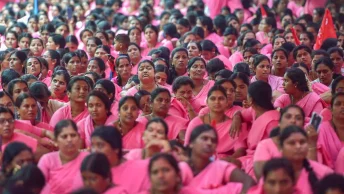
The article is divided into two parts. Part-I seeks to establish that ASHA workers fulfil conditions to be recognised as workman under the IRC. Part-II aims to show how the feminisation aspect...
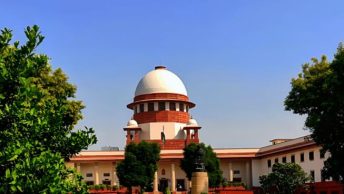
In this piece, the author shows how the Supreme Court's minority opinion in Rojer Mathew v. South Bank India Ltd. departs from the traditional essential legislative functions standard — which...

Indian courts are increasingly confronted with a problem that existing professional conduct rules were never designed to anticipate: advocates citing judgments that do not exist, generated by AI...

This piece deals with the statutory gap regarding unilateral shift changes for most of the industries in India, and argues for amendments to be made in the Industrial Relations Code in order to...
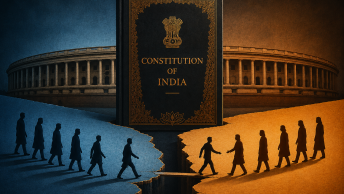
This Blog examines whether the merger exception under Paragraph 4 of the Tenth Schedule of the Constitution of India can lawfully provide protection to the AAP-BJP defectors led by Raghav Chadha. It...

Summary: The article analyses the case of Hari Devageeth v Union of India. It highlights the conflict faced by the court between two constitutional rights: a transgender man’s right to bodily...